
Monitoring, Evaluation, Research, and Learning (MERL) systems sit at the core of modern development practice, yet their potential remains underutilised. Across organisations, sophisticated data systems coexist with limited evidence-informed decision-making. This disconnect reflects a deeper structural issue: MERL has been historically designed for accountability, not learning. As development challenges become more complex, interconnected, and dynamic, this model is no longer sufficient. The future of MERL lies in its transformation into a learning-centred system -one that continuously generates insight, informs adaptation, and strengthens impact in real time.
1. When Monitoring Dominates: The Structural Limits of Traditional MERL
For decades, MERL systems have evolved under the influence of donor requirements, prioritising measurable outputs and predefined indicators. Institutions such as the World Bank and OECD have supported results-based management frameworks that standardised accountability practices across the sector. While these systems improved transparency and comparability, they also entrenched a culture where measurement became an end in itself.
In many organisations, monitoring systems are technically strong but strategically weak. Data is collected regularly, indicators are reported on time, and dashboards are populated with figures. Yet, these systems often fail to answer the most critical questions facing programme managers: why certain interventions succeed or fail, how contextual dynamics influence outcomes, and what adjustments are needed to improve performance. The consequence is a paradoxical situation where organisations are “data rich” but “insight poor.”
2. Reframing MERL: From Reporting Mechanism to Learning System
The evolution from Monitoring and Evaluation (M&E) to MERL signals an important conceptual shift, but in practice, the “learning” component often remains underdeveloped. A learning-oriented MERL system fundamentally redefines the purpose of data: it is no longer collected solely to demonstrate results, but to improve them.
The United Nations Development Programme has increasingly emphasised adaptive management as a response to complexity in development contexts. Adaptive systems rely on continuous feedback loops, where data is analysed rapidly, reflected upon collectively, and translated into programme adjustments. In such systems, MERL is not a separate function but an integral part of programme design and implementation.
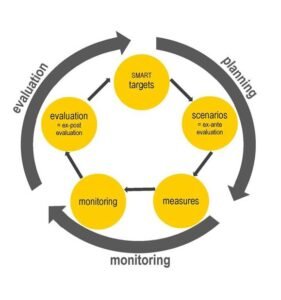
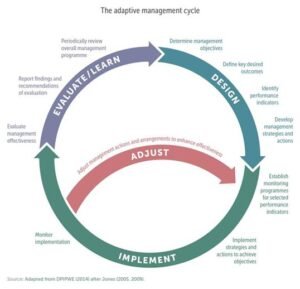
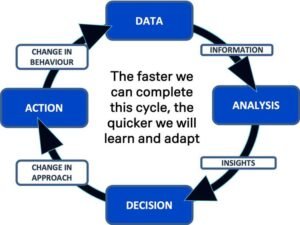
This transformation requires a shift in mindset. Instead of asking whether targets have been achieved, organisations must ask how evidence can guide better decisions today. Learning, therefore, becomes a structured and intentional process embedded within programme cycles.
3. Complexity and Uncertainty: Why Traditional Approaches Fall Short
Development challenges are no longer linear or predictable. Issues such as climate vulnerability, health system inequities, and youth unemployment operate within complex systems characterised by feedback loops, interdependencies, and context-specific dynamics. Traditional MERL frameworks, which assume stable cause-effect relationships, struggle to capture these realities.
In fragile and rapidly changing contexts, interventions interact with social, political, and economic factors in ways that are difficult to anticipate. For example, a livelihood programme may succeed in one district but fail in another due to variations in market access, social norms, or governance structures. Without a learning-oriented MERL system, such differences remain poorly understood, limiting the ability to adapt interventions effectively.
This challenge has led to growing interest in approaches such as developmental evaluation and contribution analysis, which prioritise understanding processes and mechanisms over simple attribution. These methods recognise that impact emerges from interactions within systems, not isolated interventions.
4. The Data Paradox: Abundance Without Insight
The rapid expansion of digital data collection tools has transformed MERL systems. Platforms such as KoboToolbox and PowerBI have enabled organisations to gather and visualise data at unprecedented scale. However, this technological progress has not been matched by equivalent gains in analytical capacity or data use.
The UNICEF has observed that frontline staff often experience “data fatigue,” where the burden of data collection outweighs its perceived value. This disconnect arises because data systems are frequently designed without a clear link to decision-making processes. As a result, data accumulates without being translated into actionable insights.
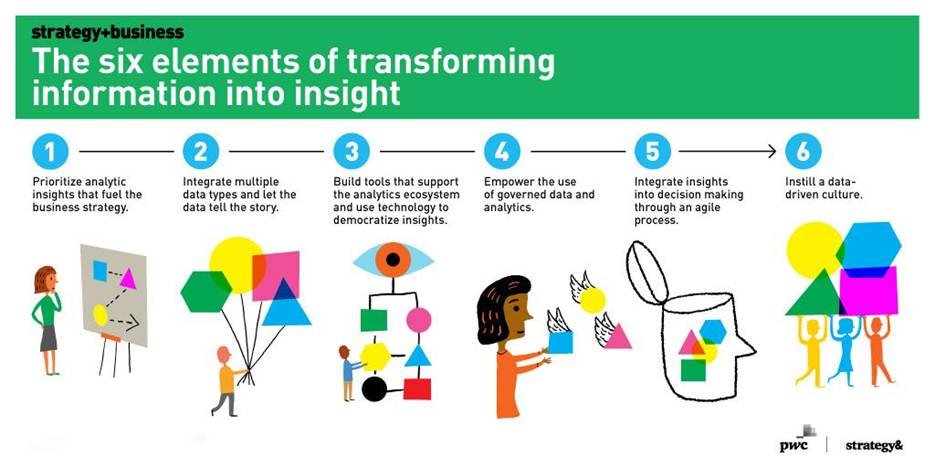
The challenge, therefore, is not merely technical but strategic. Organisations must move from data collection to data interpretation, ensuring that information is synthesised, contextualised, and communicated in ways that support real-time decisions. This requires strengthening analytical skills, integrating qualitative insights, and prioritising clarity over complexity in data visualisation.
5. Learning Gaps: Why Evidence Fails to Influence Decisions
Despite the availability of data, learning often remains episodic rather than continuous. Workshops, evaluations, and reports are conducted, but their findings are not systematically integrated into programme design. This reflects a deeper organisational issue: learning is rarely institutionalised as a core function.
In many cases, MERL outputs are produced for external audiences rather than internal use. Reports are written to satisfy donor requirements, while programme teams operate under pressure to deliver activities within fixed timelines. This creates a structural disconnect between evidence generation and programme implementation.
The International Development Research Centre has highlighted the importance of locally driven learning processes that prioritise context-specific knowledge and stakeholder engagement. Without such approaches, MERL systems risk reinforcing top-down perspectives and overlooking the experiences of communities they aim to serve.
6. Designing Learning-Centred MERL Systems
Transforming MERL systems requires more than technical adjustments; it demands a fundamental redesign of how organisations generate and use evidence. At the core of this transformation is the integration of continuous learning loops within programme cycles. Data collection must be followed by rapid analysis, structured reflection, and timely decision-making, creating a dynamic process of adaptation.
Equally important is the redesign of indicators. Traditional metrics often focus on outputs, providing limited insight into how change occurs. Learning-oriented indicators, by contrast, capture outcomes, behaviours, and contextual dynamics, enabling organisations to understand not only whether change is happening, but why.
Technology also plays a critical role, but its value depends on how it is used. Digital tools should simplify data flows, enhance accessibility, and support real-time analysis. However, without a clear learning framework, technology risks reinforcing existing inefficiencies.
Ultimately, the most significant shift is cultural. A learning-centred organisation values curiosity, reflection, and adaptation. It creates safe spaces for questioning assumptions and acknowledges that failure is an essential component of learning. Leadership is central to this process, as it shapes incentives, priorities, and organisational norms.
7. Implications for the Future of Development Practice
The transition from monitoring to learning has profound implications for both implementing organisations and donors. For organisations, it requires repositioning MERL as a strategic function that informs decision-making at all levels. For donors, it necessitates greater flexibility in funding structures, allowing for adaptive programming and iterative learning.
As global challenges become more complex, the ability to learn and adapt will define organisational effectiveness. MERL systems must therefore evolve from static reporting mechanisms into dynamic engines of insight and innovation.
At Lambda Research & Learning Advisors, this perspective underpins our approach. We see MERL not as a technical requirement, but as a strategic capability that enables organisations to navigate uncertainty, improve performance, and achieve sustainable impact.
Overall
Rethinking MERL systems is not a matter of incremental improvement; it is a structural transformation. The shift from monitoring to learning challenges deeply embedded practices and assumptions within the development sector. Yet, it also offers a powerful opportunity to enhance effectiveness, accountability, and impact.
In an increasingly complex world, organisations cannot afford to simply measure change -they must understand it, learn from it, and act on it. MERL systems that succeed in this transformation will not only produce better evidence but will also enable better decisions, ultimately leading to more meaningful and lasting development outcomes.
