
For decades, severe inherited blindness was treated largely as fate. Children born with certain retinal disorders could be supported, taught, and cared for, but not meaningfully cured. That narrative changed when a Penn Medicine and Children’s Hospital of Philadelphia team helped develop the first FDA-approved gene therapy for an inherited condition, a treatment that has dramatically improved sight in people with a form of blindness linked to RPE65 mutations, including some cases of Leber congenital amaurosis. In April 2026, that work was recognized with the Breakthrough Prize in Life Sciences.
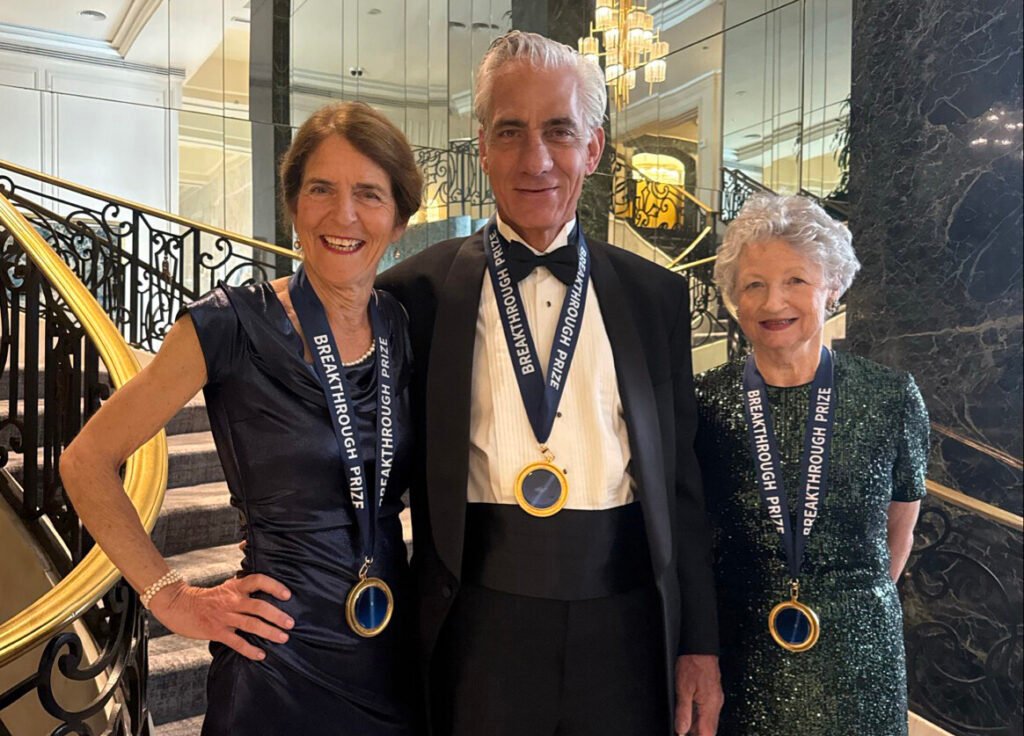
(Image: Courtesy of Penn Medicine)
A breakthrough that changed the meaning of “untreatable”
Leber congenital amaurosis is a group of rare inherited retinal disorders that begin very early in life and can cause profound vision loss in infancy or childhood. One subtype is caused by mutations in the RPE65 gene, which plays a central role in the visual cycle, the biochemical process that helps the eye convert light into signals the brain can interpret. When that gene fails, the cycle breaks down and sight is severely compromised. The National Eye Institute identifies RPE65 as necessary for processing vitamin A in the visual cycle and links mutations in the gene to one type of LCA.
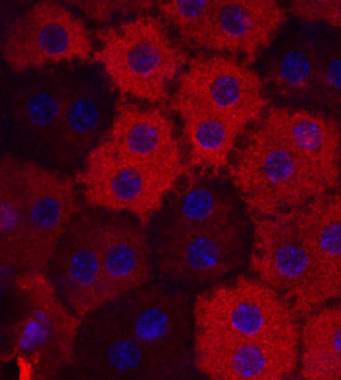
What makes this story extraordinary is that the therapy does not merely help patients cope better with blindness. It targets an underlying genetic defect. Luxturna is an adeno-associated virus vector-based gene therapy that delivers a functional copy of the human RPE65 gene into retinal cells. In practical terms, it gives the eye the missing molecular instructions needed to restart a key part of vision. That is a major shift in medicine: a movement from symptom management toward biological correction.
Why this discovery matters beyond the eye
The significance of this discovery is not limited to ophthalmology. Luxturna was the first FDA-approved gene therapy for an inherited disease, which means it opened a regulatory and scientific door much wider than a single condition. It proved that a one-time genetic intervention could be developed, tested, approved, and delivered in real patients with meaningful functional benefit. Penn describes the award-winning work as a landmark in the development of gene therapy for inherited blindness.
This is why the discovery should be understood not as an isolated success, but as a platform moment in precision medicine. Once a therapy demonstrates that targeted gene replacement can work in a carefully defined human disease, it changes the confidence of regulators, scientists, clinicians, investors, and patients. The question begins to shift from whether gene therapy can work to which diseases are now realistically addressable. That is one reason this breakthrough continues to resonate far beyond retinal medicine.
The result that matters: functional sight
One of the most important lessons from the Luxturna story is that better health is not always captured by the most familiar clinical indicator. In the pivotal study described by the FDA, the main outcome was functional vision measured through a multi-luminance mobility test, not just standard eye-chart reading. The FDA reports clinically meaningful improvement in the ability of treated patients to navigate under lower light conditions.
That matters because vision is lived before it is measured. For a child moving through a corridor at dusk, for a young person recognizing obstacles in poor lighting, or for a family seeing greater independence emerge where there was once deep limitation, the gain is not abstract. It is practical and life-shaping. Standard visual acuity still matters, but this therapy shows that medicine should also be judged by restored function in ordinary life.
The long road behind the “overnight” breakthrough
The public often sees breakthroughs as sudden moments, but this one was built over many years of cumulative science. NEI-supported research helped identify the RPE65 gene and clarify its role in the visual cycle. Animal models then provided crucial evidence that restoring gene function could recover visual responses, helping to lay the foundation for later translational work and eventual approval.
That matters for how institutions should think about innovation. Major breakthroughs usually come from ecosystems, not isolated genius. This story required genetics, retinal biology, vector science, surgery, clinical trials, regulatory science, and patient participation. It is also a reminder that investment in basic science often becomes valuable in ways that are impossible to predict at the moment of discovery.
The limits of the promise
This is a remarkable advance, but it is not a universal cure for blindness. Luxturna is indicated specifically for patients with confirmed biallelic RPE65 mutation-associated retinal dystrophy, and patients must have viable retinal cells as determined by the treating physician. The FDA also notes risks associated with the procedure and ocular complications, which is why the treatment depends on specialist delivery and careful follow-up.
That limitation is important because it shows the next frontier clearly. Precision medicine is not simply about inventing powerful therapies. It also depends on early diagnosis, referral systems, genetic testing, specialist capacity, and long-term follow-up. A therapy can be scientifically brilliant and still remain out of reach if the surrounding health system is not ready. This is an inference drawn from the treatment requirements and delivery model described by the FDA and NEI.
What this means for health systems and global equity
The Luxturna story forces health systems to confront a new type of policy challenge. Gene therapies often involve high upfront complexity, highly specialized delivery, and benefits that unfold over years. That does not fit neatly into older service models built around routine procedures or chronic medications. The broader implication is that regulatory, financing, and service-delivery systems will need to evolve alongside the science. This is an inference based on the therapy’s one-time delivery model and specialist requirements.
For low- and middle-income countries, including many in Africa, the breakthrough brings both hope and pressure. Hope, because it confirms that diseases once seen as biologically fixed may become treatable. Pressure, because equitable access will require much more than scientific admiration: stronger genomic diagnostics, ethical oversight, specialist clinical pathways, and regulatory readiness. Scientific progress alone does not guarantee health justice.
Why this matters for the future of medicine
The deepest significance of this breakthrough is philosophical as much as clinical. It changes how medicine understands inheritance. For many years, an inherited disease often meant a condition that could be described and managed, but not fundamentally altered. Gene therapy begins to change that assumption. In selected diseases, medicine is no longer only observing the consequences of faulty genes. It is starting to intervene in those consequences directly.
That does not mean every inherited disease is now solvable. It does mean the boundary between diagnosis and repair is shifting. The implications extend beyond ophthalmology into rare disease medicine and the wider future of targeted therapeutics. Luxturna is therefore more than a retinal treatment. It is a signpost for the next era of precision medicine.
The Lambda perspective
For institutions working at the intersection of research, policy, and systems strengthening, this breakthrough offers a wider lesson. Transformational science becomes transformational public value only when research ecosystems, regulation, delivery systems, financing, and ethical governance evolve together. The story of FDA-approved gene therapy for inherited blindness is ultimately a story about translational success: science moving from mechanism to human impact. That is the kind of innovation that should matter most to governments, funders, health leaders, and development actors alike.
Luxturna will not end blindness. But it has already ended one assumption medicine held for too long: that some forms of inherited childhood blindness must remain untreatable. In doing so, it has expanded not only what clinicians can do, but what societies can reasonably hope for.
